

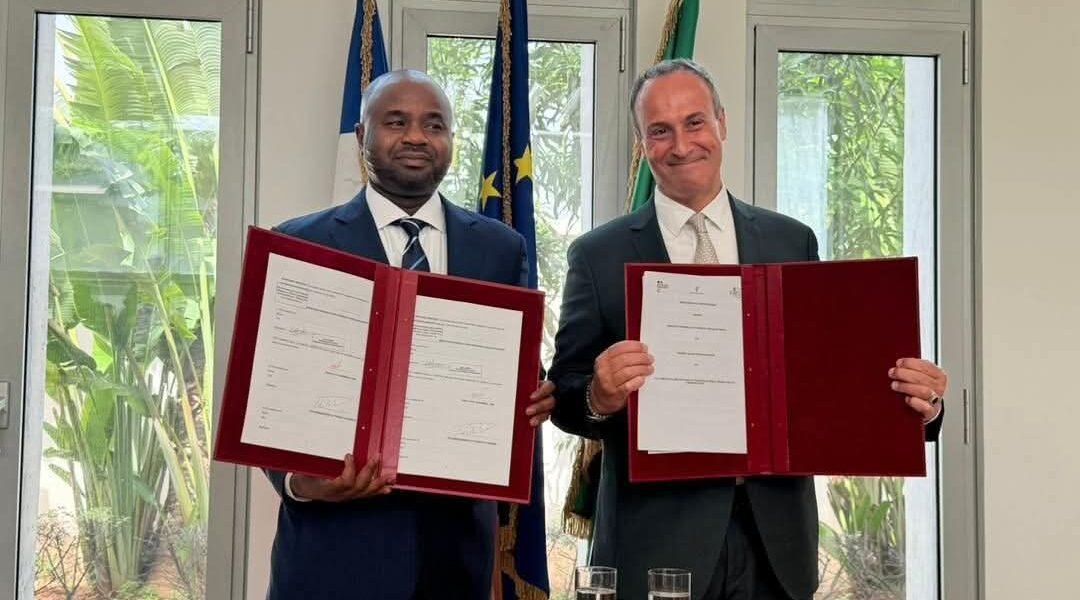
President Tinubu’s recently concluded tax partnership with France, purportedly centred on the provision of advanced digital tax systems and modern enforcement and compliance tools, is one I condemn without reservation.
It is regrettable that a model of tax cooperation similar to those seen between Australia and Pacific Island nations such as Palau, Papua New Guinea, and Fiji is now being presented as aspirational for Nigeria – a country endowed with vast human capital and natural resources. I must state clearly that Nigeria should not be positioning itself as a dependent in arrangements that smaller and less-resourced nations enter out of necessity.
The decision to engage France at this moment, particularly in light of its recent rejection by several African countries seeking to redefine their sovereignty and strategic autonomy, raises serious concerns about the depth of ingenuity and independent thinking underpinning this administration’s policy choices.
More troubling still is the fact that a tax reform the President himself described as central to stabilising and fixing Nigeria’s economy was enacted without a clearly defined, homegrown framework for its enforcement. It is difficult to reconcile the importance attached to this reform with the absence of a robust, domestically driven technological mechanism to guarantee its effective implementation.
This naturally provokes fundamental questions: what were the core elements of the tax reform legislation if enforcement mechanisms were not thoroughly debated and determined during legislative deliberations? If enforcement was considered, did we as a nation implicitly concede that Nigeria lacks the capacity to efficiently collect taxes without resorting to third-party contracts and external collaborations – arrangements that risk entrenching economic dependence?
I have learned that a key component of this partnership is the transfer of modern taxation technology from France to Nigeria. I must state unequivocally that this premise is unacceptable. A serious tax reform should be anchored in accountability, institutional capacity, and national self-sufficiency. If the President is unable to inspire these principles as the foundation of reform, one must ask what legacy such a tax agenda seeks to leave behind. Will this reform be remembered as an assertion of national sovereignty, or as a policy that deepened external dependence?
READ: America First Global Health Strategy: An Attempt to Deepen Nigeria’s Religious Fault Lines
It is deeply disappointing that, rather than seize this moment to build indigenous technological capacity, the Tinubu’s administration appears willing to subordinate this imperative to external partnerships that do little to strengthen Nigeria’s long-term independence. True development cannot be achieved through perpetual reliance on others to solve problems we possess the talent and resources to address ourselves.
Development, in its truest sense, is synonymous with self-sufficiency. It is the responsibility of political leadership to identify, nurture, and deploy national talent in pursuit of that goal, particularly in the strategic domain of technology. We must move away from the mindset of “technology transfer” and embrace the discipline of technology acquisition through innovation, learning, and local problem-solving. As Professor Calestous Juma rightly observed, technology is not transferred; it is acquired.
This shift in mindset requires deliberate leadership and a fundamental change in approach. It is this vision that President Tinubu ought to champion in Nigeria’s tax reform and beyond.
-Francis Onyema, 2027 presidential aspirant
One comment
[…] Tax Reform: Tinubu's Partnership with France Raises Concerns of Depth of Ingenuity and Independent T…January 3, 2026 […]